Photo quality first
Framing, face count, angle, brightness and sharpness are checked before measurement.
Explore a photo-based geometric score for symmetry, visible facial thirds, facial fifths, and face length-to-width balance.
Analysis runs in your browser. Original photos are not saved.Use one clear, front-facing photo with even light and one person in frame.
Choose a photo to begin · JPG, PNG or WebP, up to 10 MB each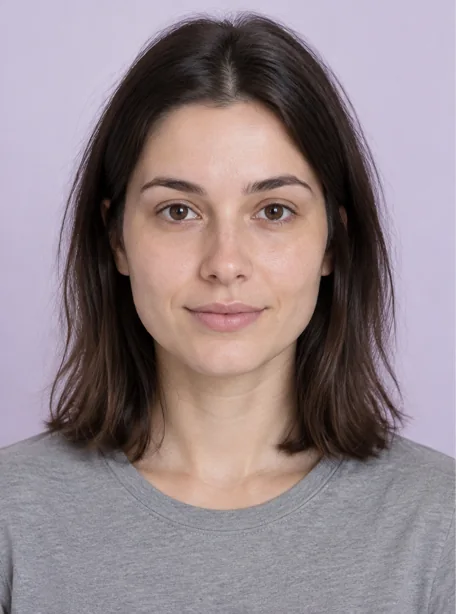
Your result explains the four components, their weights, and the visible measurements behind them. Switch between photo guides to explore each reading.
This tool answers a narrower, measurable question: how closely do the visible landmarks in this photo match our symmetry and proportion references? It maps your face in the browser, checks photo quality and calculates a geometric score.
Use the result to understand the readings in your photo. Expression, style, movement and personal taste also influence attraction, and they are outside this score.
Framing, face count, angle, brightness and sharpness are checked before measurement.
See the actual readings, reference values and weights alongside your score.
The free scan stays in this page. Open Share score to share or download a card if you want a copy.
Higher scores mean closer alignment with this tool’s selected geometric references. These bands come directly from scoring version 2.1; they are not beauty percentiles.
Close alignment across the four geometric components.
Broad alignment, with some variation between components.
A mixed profile. Read each component and check the photo conditions.
Further from the selected references. Distinctive geometry can still be attractive to people.
The score uses the same four components for every face. The weights and tolerances are product settings, not a universal scientific formula.
Compares six left–right landmark pairs against the face center after correcting head roll.
Compares the visible forehead, midface and lower-face sections with equal thirds. The upper boundary is a forehead landmark, not your hairline.
Compares five horizontal sections across the cheeks and eye corners with equal fifths.
Compares visible face length / width with the 1.618 reference also used by Golden Ratio in the full report. The component uses a different scoring curve and contributes only 10% of the overall score.
Each component uses score = 100 × (1 − min(1, error / tolerance)^1.5), rounded to 0–100. Small deviations lose fewer points; larger deviations still reduce the score. The weighted result is rounded to an integer. Read the complete methodology →
Pose, camera distance, expression and lens distortion can change the result. A lower score describes distance from these selected references in a photo; it is not a verdict on your appearance or value.
Keep your head level and the camera at eye height. Both sides of your face should be visible.
Face a window or diffuse light source. Avoid strong side shadows and backlighting.
Keep your eyes open and your mouth relaxed. Expressions move landmarks and change proportions.
Move hair away from your eyes and jaw. Remove sunglasses, masks and heavy filters.
Very close wide-angle selfies distort proportions. Avoid filling the frame from only a few inches away.
Choose a sharp JPG, PNG or WebP under 10 MB with one person in the frame.
The optional full report adds a styling concept, six hairstyle images, photo-based color guidance and a four-week plan. Your photo is sent only when you consent to the paid workflow.
AI detects facial landmarks; deterministic formulas calculate the four geometric scores. The free result does not ask a language model to judge your beauty.
85–100 is the highest band in our current formula. A higher score means closer alignment with our references, not a universal measure of beauty or a population percentile.
Yes. The test uses the same geometry, weights and reference values for all faces. It does not choose a different scale based on inferred gender or ethnicity. Any fixed proportion reference still captures only a limited view of facial appearance.
Camera distance, lens, head angle, lighting and expression affect the visible landmarks. Compare photos taken under similar conditions before drawing conclusions.
No. A side-facing photo is rejected because this test needs both sides of the face to measure frontal geometry.
The scan runs in your browser and the original photo is not sent or saved on our server. The free result stays in the current page session. An optional paid report sends the photo only with your consent.
Yes. After a qualifying scan, open Share score to share your result or download a card. Saving and sharing are actions you choose; the site does not keep a free report history.
Styling can change how your features read visually. The score measures landmark geometry in a photo and does not promise that hair, makeup, skincare or exercises will improve it.
You can open the result preview with your current photo, then choose whether to pay. Generation starts after payment confirmation. The complete PDF is sent to your delivery email.